
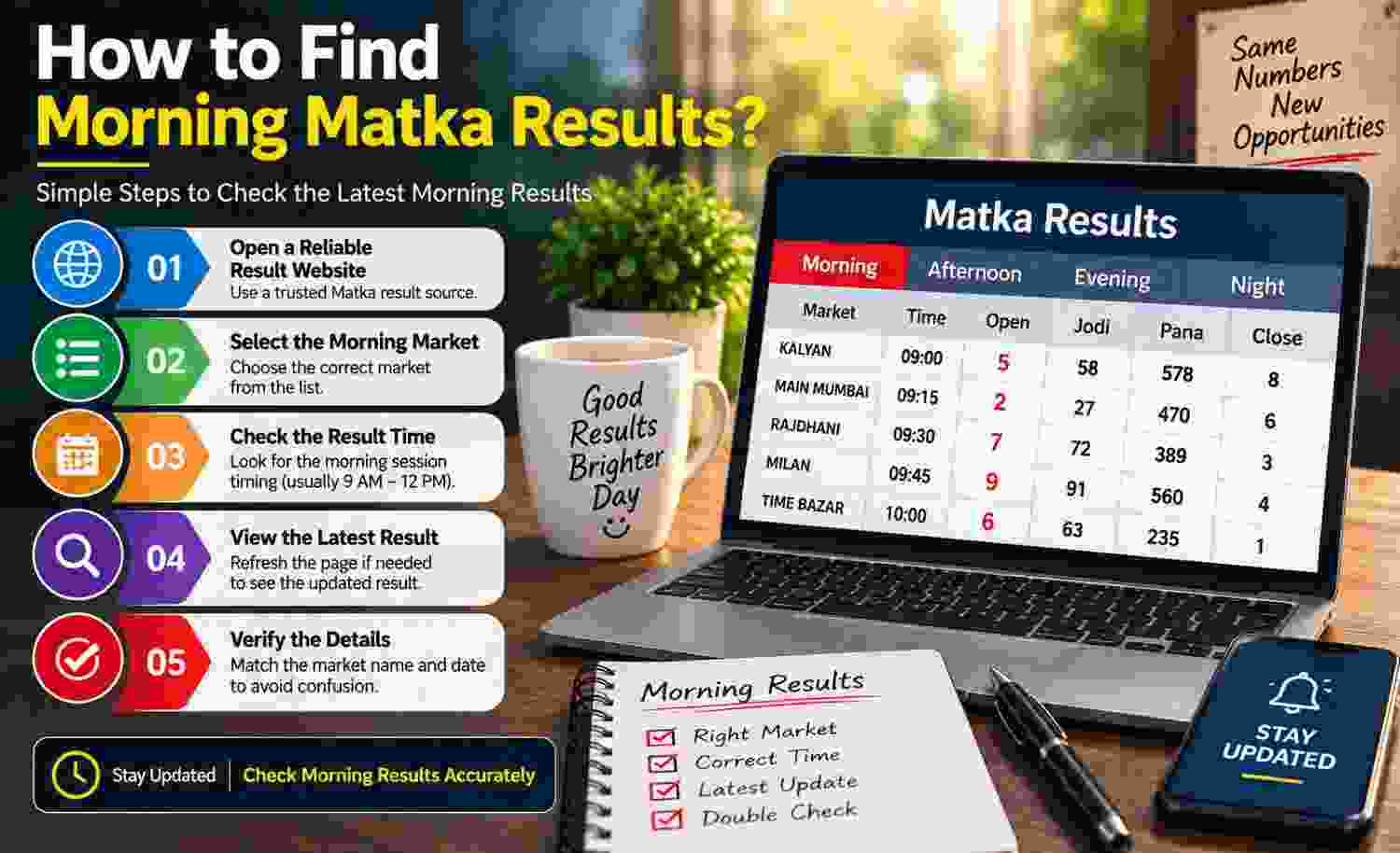
Morning Matka result pages can become confusing when several markets, dates, sessions, and historical records appear together. Finding the intended morning entry requires more than locating the first visible result. The market name, calendar date, session label, result field, chronological position, and completion status all matter. Result-page layouts can also vary between desktop and mobile views, while older morning entries may move into archive sections. A consistent navigation method helps readers identify the correct published information without confusing a morning result with a later session, an earlier date, or an incomplete field.
What Is a Morning Matka Result?
A morning Matka result generally refers to a published result entry identified by a morning or equivalent early-session label on a result-oriented page. It does not imply one universal clock time because individual markets may use different session names, structures, and publication patterns.
The key point is that the morning designation belongs to the page’s information structure. Readers should therefore identify the exact label attached to the result rather than assume that any early-looking entry represents the morning session.
Morning Labels Can Vary
Depending on the page structure, an early session may appear under labels such as:
- morning;
- first session;
- opening session;
- early session;
- another page-specific session name.
These labels are examples of possible organisation methods, not universal standards. The displayed market and session heading remain the primary references.
Start With the Correct Market Name
Market identification should come before any date or result field. A page may display several markets close together, sometimes using similar rows, cards, columns, or expandable blocks.
If the market name is misread, every later check can apply to the wrong entry.
Why Position Alone Is Unreliable
Screen position can change when a page adjusts for different devices. A market shown in one desktop column may move into a vertical stack on mobile. Likewise, cards can shift when sections expand or collapse.
A page containing DPBoss Satta in surrounding descriptive text still requires readers to identify the actual market heading attached to the morning result block.
Check the Calendar Date
After confirming the market, verify the calendar date assigned to the morning entry. Result pages may show several consecutive dates, and an older record can sit directly beside or below the newest one.
Date Formats Need Context
Dates may appear in written, abbreviated, or numerical formats. When a numerical format could be ambiguous, examine neighbouring dates and any month or year heading.
Useful date checks include:
- confirm the intended day;
- verify the month;
- check the year where displayed;
- identify whether the listing belongs to current or historical records;
- ensure an update timestamp is not being mistaken for the result date.
Look for the Morning Session Label
The morning session label tells readers which result block belongs to the early part of the page’s market structure.
Do not identify a morning result merely because it appears above an evening or night section. Visual ordering can vary.
Connect the Session to the Correct Entry
The session label should be read together with:
- market name;
- calendar date;
- result field;
- opening or closing label where applicable;
- completion status.
When several sessions share one date heading, each should be treated as a separate information block.
Distinguish Morning Results From Later Sessions
Morning and later results may share similar styling, especially on compact pages. Consequently, session labels become more reliable than colour, position, or spacing.
Use Labels Rather Than Assumptions
A morning entry can normally be separated from afternoon, evening, or night information by checking the session heading and associated date.
If two session blocks sit under the same date, confirm which heading belongs to each field before reading the displayed information.
Find the Latest Morning Result
The latest morning result is the most recent completed entry associated with the morning session, not necessarily the first numerical value visible on the page.
A newer evening or night entry may appear above it, depending on the page organisation.
Confirm Latest Status Through Several Details
Check:
- the date;
- morning session label;
- completion status;
- chronological order;
- whether the section is current or historical.
These checks prevent an older morning record from being mistaken for the newest one.
Check the Chronological Direction
Chronological ordering determines how dates move through a result listing. Some pages place newer records first, while others begin with older entries.
Ignoring this structure can lead readers directly to the wrong morning result.
Newest-to-Oldest Listings
In descending order, the newest date appears first and older dates follow beneath or after it.
This arrangement can make recent morning results easier to locate, but only if the reader confirms the market and session before moving through the list.
Oldest-to-Newest Listings
Ascending order starts with older dates and moves forward. In this arrangement, the newest morning entry may appear near the bottom of the visible list or later in the archive.
Compare neighbouring dates before assuming which direction the page follows.
Identify the Correct Result Field
Result pages can contain several numerical or status fields within one market block. The correct morning entry should therefore be identified through labels, not just through the presence of numbers.
Read the Field Within Its Own Context
Before interpreting a displayed field, confirm:
- market;
- date;
- morning session;
- field label;
- result status.
This method prevents information from an adjacent row, session, or market from being associated with the intended morning result.
Check Opening and Closing Information Carefully
Some result formats separate opening and closing information. These fields may sit side by side on desktop or stack vertically on mobile.
One field may also become visible before another.
Keep Separate Fields Separate
Do not assume that every field updates simultaneously or that both must always appear together.
Where opening and closing labels exist, match the displayed information to the correct label before treating the morning entry as complete.
What If Only Part of the Morning Result Appears?
A partially displayed morning entry should be treated as incomplete information until the page clearly shows otherwise.
Blank or partially populated fields can reflect several page states.
Common Incomplete Display States
A result block may appear:
- blank;
- pending;
- incomplete;
- unavailable;
- partially populated;
- awaiting an update.
These descriptions depend on the individual page. A blank field alone should not be treated as a completed result.
Check Whether the Page Has Been Updated
A result page may show an update indicator, timestamp, completed status, or visible change in the result field.
These details can help readers determine whether the morning section has refreshed.
Useful Update Indicators
Depending on the layout, signs may include:
- a populated field replacing a placeholder;
- an entry-specific update time;
- a completed status;
- movement into a recent-results area;
- removal of a pending label.
However, page-level update information may apply to the entire page rather than one morning entry.
Result Date Versus Page Update Time
The result date identifies the calendar day assigned to a market entry. An update timestamp indicates when a page or result block may have changed.
These two pieces of information should remain separate.
Why This Distinction Matters
An update can occur later than the displayed result date. Therefore, readers should not treat the update timestamp as a replacement date unless the page explicitly identifies it as such.
The market name and result date remain the main references for locating the intended morning record.
Use Historical or Archive Sections
Earlier morning results may no longer remain visible in the main recent-results area. Once newer entries appear, older records can move into history or archive sections.
Where Previous Morning Records May Appear
Historical information may be organised through:
- result history;
- previous-date listings;
- weekly records;
- monthly archives;
- expandable older-result sections;
- paginated history pages;
- date-based records.
After opening an archive, recheck the market and morning session because the historical layout may differ from the current section.
Find Yesterday's Morning Result
Finding the previous calendar day's morning result requires matching the date first and then confirming the session.
Do not simply select the entry immediately below the current result because chronological order may differ.
A Reliable Previous-Day Check
Use this sequence:
- Identify the intended market.
- Determine the previous calendar date.
- Locate that date within the market section.
- Confirm the morning session label.
- Read the correct result field.
- Check whether the entry appears complete.
- Move to an archive if the date is no longer visible among current records.
Compare Morning Results Across Consecutive Dates
Consecutive-date comparison can help readers follow how morning records are organised across a result page.
The purpose is navigational rather than predictive.
Keep Date Continuity Clear
When moving from one date to another:
- stay within the same market;
- keep the same morning session;
- verify the chronological direction;
- note any missing or incomplete date;
- avoid moving into a neighbouring market row.
This preserves equivalent context across consecutive records.
How Mobile Pages Display Morning Entries
Mobile pages often reorganise wide result layouts into compact vertical structures. Fields that appear side by side on desktop may become stacked, collapsed, or horizontally scrollable.
Common Mobile Display Issues
Readers may encounter:
- stacked result cards;
- collapsed sections;
- shortened market labels;
- horizontal scrolling;
- hidden fields;
- compact date displays;
- expandable result blocks;
- pagination below the visible area.
After expanding or scrolling, confirm the market and session again because visual relationships may have shifted.
What to Do If the Morning Result Is Not Showing
A missing morning result does not automatically mean that the information is permanently unavailable. Several ordinary navigation or display conditions can affect visibility.
Possible Reasons for a Missing Entry
Check for:
- the wrong market;
- an incorrect date;
- the wrong session;
- incomplete publication;
- delayed page updating;
- cached or older content;
- movement into an archive;
- a hidden mobile section;
- an active filter;
- a temporary loading problem.
A normal refresh can help if the page appears stale, but repeated refreshing is unnecessary.
Common Mistakes When Finding Morning Results
Most navigation errors occur when readers separate the result field from its surrounding labels.
Mistakes Worth Avoiding
Common problems include:
- reading the wrong market;
- selecting the wrong date;
- confusing morning and night sessions;
- choosing an older entry;
- overlooking chronological direction;
- mixing opening and closing fields;
- treating a pending entry as final;
- confusing an update timestamp with the result date;
- overlooking archive sections;
- reading an adjacent row or column;
- ignoring active filters;
- missing information hidden by a mobile layout.
A Simple Morning Result Search Process
A consistent process makes result retrieval easier across different page structures.
Follow these steps:
- Identify the intended market.
- Confirm the required calendar date.
- Find the morning-labelled session.
- Check the heading directly connected to the result entry.
- Determine whether the page runs newest-to-oldest or oldest-to-newest.
- Identify the correct displayed result field.
- Check whether the entry is complete, pending, blank, or unavailable.
- Separate the result date from any update timestamp.
- Search the archive if the result no longer appears prominently.
- Review active date, session, or market filters.
- Inspect the mobile layout if information appears hidden or truncated.
- Reconfirm the market, date, and session together before interpreting the displayed entry.
Conclusion
Finding a morning Matka result accurately depends on matching the market, calendar date, morning session, result field, chronological position, and completion status. Page layouts can vary, while older records may move into archives and mobile designs may hide or rearrange important labels. Blank or pending entries should remain incomplete until clearer information appears. Checking result dates separately from update timestamps also prevents common navigation mistakes. A consistent search sequence allows readers to locate current and historical morning entries more reliably while avoiding confusion with later sessions, neighbouring markets, active filters, or adjacent records.
FAQs
1. Where are morning Matka results normally displayed?
Morning results may appear inside a current-results section, a market-specific block, or a session-based listing. Their exact position varies between page layouts. Look for the market name, calendar date, and morning session label together rather than assuming that the first visible result on the page belongs to the morning period.
2. How can I identify the correct morning market?
Start with the written market heading and follow the result block connected to it. Avoid relying only on screen position because desktop columns may stack differently on mobile. After confirming the market, verify the calendar date and morning session before reading the displayed result field or status information.
3. How do I know whether a result belongs to the morning session?
Check the session label attached to the result entry. A page may use morning or another page-specific early-session description. Then verify that the same visual block contains the intended market and date. Position alone is not reliable because later sessions may appear above or beside morning entries.
4. Why might a morning result not appear yet?
A morning result may appear blank because the wrong market, date, or session is selected, publication is incomplete, the page has not refreshed, or the record sits elsewhere. Cached content, active filters, collapsed mobile sections, archive movement, and temporary loading problems can also affect what is visible.
5. How can I find a previous morning result?
Locate the required earlier calendar date within the correct market, then confirm the morning session attached to that date. If the entry no longer appears in the current section, check historical records, archive navigation, pagination, or date-based listings. Verify chronology before assuming where the earlier record should appear.
6. How can I distinguish morning and night results?
Use the session headings attached to each result block. Morning and night entries can share the same calendar date, so the date alone is insufficient. Confirm the market name, session label, result field, and page grouping together before deciding which displayed information belongs to the intended morning record.
7. Does chronological order affect morning result navigation?
Yes. A newest-to-oldest listing places recent dates first, while an oldest-to-newest layout moves towards newer dates later in the sequence. Compare neighbouring date labels before navigating. Identifying the direction prevents an older morning entry from being mistaken for the latest record or a previous-day result.
8. What does a blank morning result field mean?
A blank field does not have one universal meaning. Depending on the page, it may represent incomplete, pending, unavailable, or not-yet-displayed information. Look for nearby status labels and update indicators. Without a clearly completed field, treat the displayed information as incomplete rather than as a confirmed morning result.
9. How can mobile layouts affect morning result visibility?
Mobile layouts may stack columns, collapse sections, shorten labels, hide information behind horizontal scrolling, or place result fields inside expandable blocks. After changing or expanding the view, verify the market, date, and morning session again because their visual positions may differ substantially from the desktop arrangement.
10. How is a result date different from an update timestamp?
The result date identifies the calendar day assigned to the market entry. An update timestamp indicates when the page or specific result block may have changed. Use the result date when locating the intended morning record, while treating update information as supporting context rather than as a substitute date.